Mercedes Brake Pad Warning Light: Meaning and Next Steps
Updated: 2026-11-21
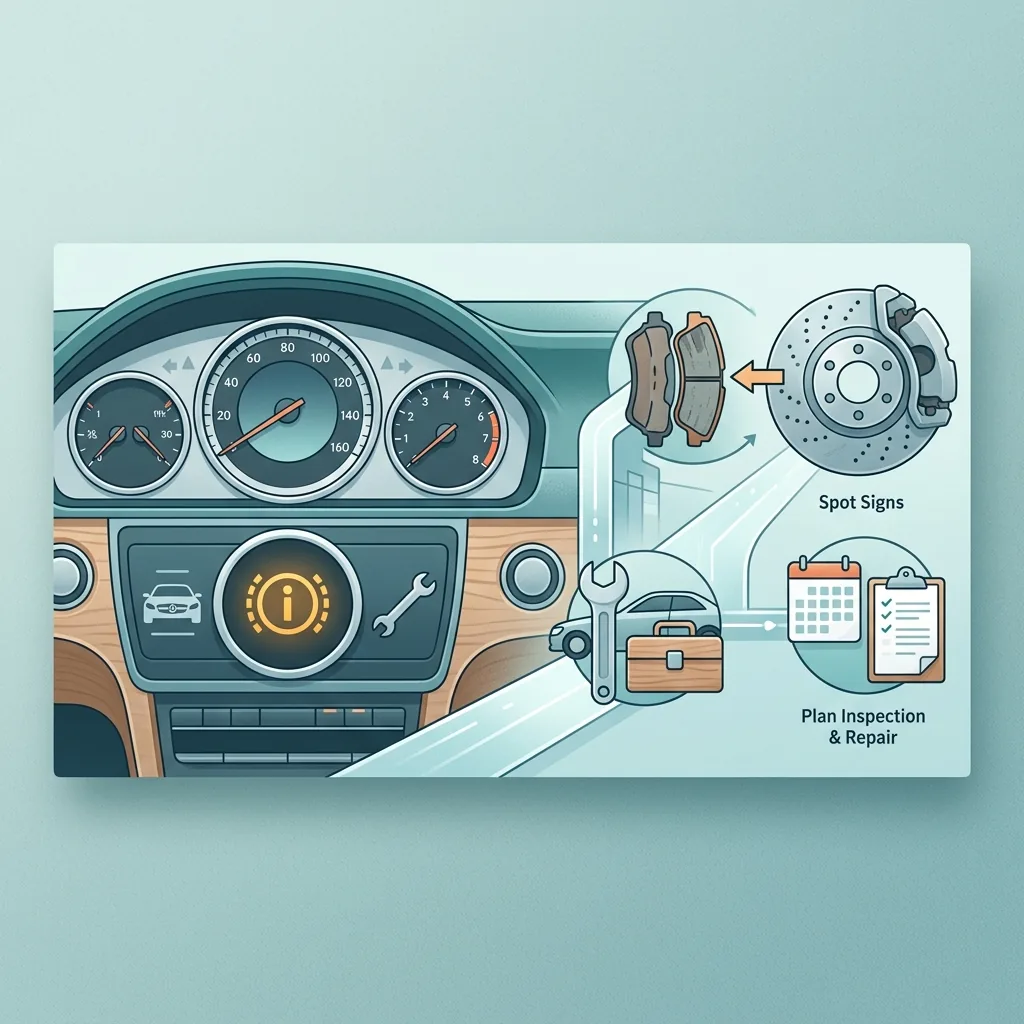
A Mercedes brake pad warning light usually means the brake pads have reached a wear threshold and need inspection. Read the exact dashboard message before deciding what to do. If it only concerns pad wear and the brakes feel normal, arrange a prompt inspection. If the display reports low brake fluid, braking changes, or you hear grinding, stop safely and get help before driving farther.
Mercedes-Benz uses different wording across models and years. You might see “Check Brake Pad Wear,” “Check Brake Pads See Operator’s Manual,” or an older “Brake Pad Wear Visit Workshop” message. In its 2024 GLB owner’s manual, Mercedes-Benz says the “Check Brake Pads” message means the pads have reached their wear limit and directs the driver to a qualified workshop.
| Dashboard message | What it calls for |
|---|---|
| Check Brake Pads or Check Brake Pad Wear | Have the brakes inspected promptly. |
| Check Brake Fluid Level | Stop safely and do not continue driving. Consult a qualified workshop. |
| Brake malfunction or a message containing Stop | Follow the exact instruction in your vehicle’s manual; do not treat it as a routine pad reminder. |
The warning does not report the thickness of every pad or tell you how many miles you can drive. It also does not establish whether the rotors need replacement. Those questions require an inspection. Mercedes-Benz warns in its 2020 GLE manual that braking power may be restricted when pads reach their wear limit.
Do not judge the warning by the color of a lamp alone. Displays and accompanying lamps vary by vehicle. Read the full message, note any other warnings, and check the manual for your model and year.
Read and record the exact message. Pull over where it is safe to do so. Photograph the display or write down its wording, including any second warning. “Check Brake Pads” and “Check Brake Fluid Level” require different responses.
Notice how the vehicle brakes. Think about the last few stops. Does the pedal feel different? Does the car pull to one side, make a grinding sound, or take more effort to slow? You do not need to perform a hard braking test to find out. If braking already feels abnormal, stop driving and arrange assistance.
Check your owner’s manual. Find the entry for the displayed message in the Mercedes-Benz USA owner’s manuals. Use your model and year rather than advice for a different Mercedes. The manual’s instruction takes priority over a general guide.
Arrange a brake inspection promptly. Tell the shop the exact message and any noise, vibration, pulling, or pedal change you noticed. If the warning appeared just after brake service, mention that too. It helps the technician decide where to begin without assuming the new pads are the cause.
Confirm how to get the vehicle inspected. Do not use a general online guide to decide that a vehicle with a brake warning is safe to drive. Check your model's manual and contact a qualified workshop or roadside assistance if you are unsure how to transport it. If you have a low-fluid or stop message, grinding, or changed braking, do not continue driving; arrange assistance.
Do not clear the message merely to make the dashboard quiet. It will not establish that the pads, rotors, or brake system are safe.
There is no universal safe mileage. The 2024 GLB manual says the pads have reached their wear limit and directs the driver to a qualified workshop. It does not give a remaining-distance allowance. Follow the instructions for your model and ask a qualified workshop or roadside assistance how to get the vehicle inspected if the safe transport method is unclear. A normal-feeling pedal does not measure remaining pad material.
Stop in a safe place and seek assistance if you notice any of these signs:
For low brake fluid, Mercedes-Benz instructs drivers not to continue driving or add brake fluid; topping it up does not correct the underlying fault. The instructions appear alongside the distinct pad-wear message in the 2024 GLB manual. Do not assume a fluid warning is simply another way of saying the pads are worn.
Ask the shop to identify which brakes need work and why. A useful inspection covers the inner and outer pads, rotor condition, and the wear sensor and its wiring where fitted. The technician should also look for a sticking brake or signs of a leak if wear is uneven or braking feels wrong. A glance through one wheel may miss an inner pad that has worn faster.
Request the remaining pad measurements and an explanation of any rotor recommendation. Rotors may need replacement because of wear or damage, but the dashboard pad warning alone does not prove that every rotor—or every pad on the vehicle—needs replacing. The repair plan should reflect the measurements, brake condition, and specifications for your vehicle.
The shop should confirm parts using the vehicle’s VIN and brake equipment. Brake components can differ by model, year, and option package. The same applies to wear sensors: a replacement must fit the specific application. Mercedes-Benz describes its brake pad wear indicator sensors as one-time-use parts when the warning indicates pad replacement.
If the warning appeared immediately after a brake job, ask the shop to inspect the sensor connection, wiring, installed parts, and pads before authorizing another replacement. A warning that remains on deserves a diagnosis; resetting a service reminder is not a substitute for checking the brakes.
Before approving work, ask for a written estimate that separates pads, rotors, sensors, and labor. That makes it easier to understand what inspection found and which repairs address the warning.
Check that the warning is gone when you collect the vehicle, and ask what caused it. Keep the invoice and the inspection findings, including pad and rotor measurements if the shop provided them. If a rotor or another component was replaced, the invoice should state why.
Ask the shop whether your new brakes have any specific bedding or use instructions. Follow those instructions for the parts installed on your vehicle. During the first drives, pay attention to pedal feel, noise, vibration, and whether the car tracks straight while braking.
If the message returns, contact the shop and report when it appeared. If braking also feels abnormal, stop driving and arrange assistance. A warning that clears by itself does not replace the shop's inspection findings or repair record.
A pad-wear message means the vehicle has detected that brake pads or linings have reached a wear threshold. Mercedes-Benz directs owners to a qualified workshop. The message does not identify every worn component or give a safe distance to drive. Follow your vehicle's manual and contact a qualified workshop or roadside assistance if you need help deciding how to get it inspected.
There is no universal mileage allowance or blanket permission to drive with the warning. Follow the instruction in your model's manual and ask a qualified workshop or roadside assistance if the transport decision is unclear. Stop and seek assistance if braking changes, you hear grinding, or the display reports low brake fluid or instructs you to stop.
It indicates a need to inspect the pads; it does not establish that the rotors must be replaced. A technician should measure pad material and assess rotor wear and condition before recommending parts. Ask which wheels are affected and what measurements support the estimate.
The sensor, its connection, wiring, or another set of pads may still need attention. The installed sensor may also be unsuitable for the vehicle. Have the shop inspect the complete system and confirm the cause. Do not rely on a dashboard reset as proof that the brake work is complete.